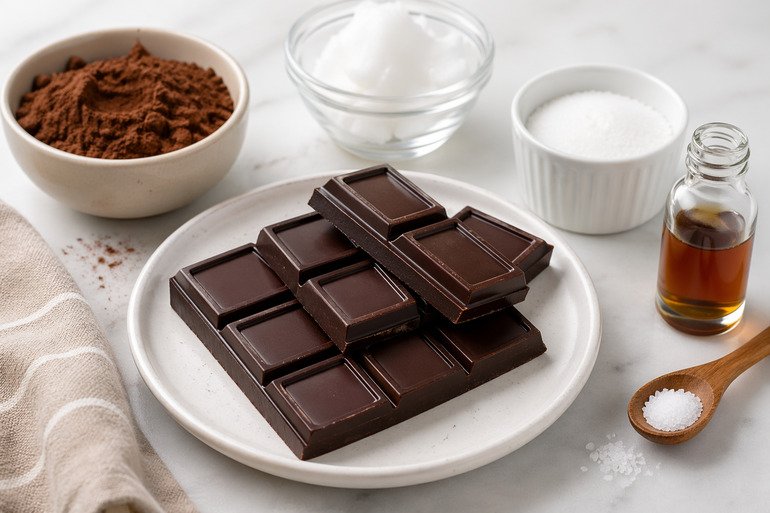
Love chocolate but want to cut back on added sugar? Making chocolate at home is easier than you might think. This homemade sugar-free chocolate recipe uses unsweetened cocoa powder, cocoa butter, and a sugar substitute to create a rich, chocolatey treat with just a few ingredients.
Many store-bought sugar-free chocolates contain ingredients you may prefer to avoid. Making your own lets you control the sweetness, flavor, and texture.
In this guide, you’ll learn how to make homemade chocolate step by step, choose the right sweetener, avoid common mistakes, and store your finished chocolate properly.
Why make a homemade sugar-free chocolate recipe?
One of the biggest benefits of making chocolate at home is knowing exactly what goes into it. You can choose your cocoa powder, adjust the sweetness, and experiment with different flavors.
Homemade chocolate also allows you to avoid added sugar when you use unsweetened cocoa powder and a suitable sugar substitute.
However, sugar-free does not automatically mean low-calorie or healthier. Cocoa butter and coconut oil are rich in fat and calories, so portion size still matters.
According to the U.S. Food and Drug Administration (FDA), sweeteners are regulated according to their ingredients and intended uses. Some require FDA approval as food additives, while certain others are considered Generally Recognized as Safe (GRAS).
Making your own chocolate lets you select ingredients that suit your taste and dietary preferences.
Ingredients for easy homemade sugar-free chocolate
Preparation time: 10–15 minutes
Chilling time: 1–2 hours
Total time: Approximately 1 hour 15 minutes to 2 hours 15 minutes
Yield: Approximately 8 small pieces, depending on the mold
You don’t need a long shopping list to prepare chocolate at home. What matters most is how the ingredients work together.
For this recipe, cocoa butter provides the base that helps the chocolate firm up when chilled. Unsweetened cocoa powder brings the deep chocolate taste, while a finely powdered sugar substitute softens its bitterness.
A little salt helps bring the flavors together. You can also include oil-based vanilla flavoring if you prefer a subtle vanilla note.
For the equipment, keep a saucepan, heatproof bowl, spatula, and chocolate mold nearby. Make sure everything is completely dry before you begin.
Choosing the right cocoa powder
Cocoa powder is the heart of your chocolate. Always pick unsweetened, high-quality cocoa for the best result. Natural cocoa gives a bold, strong chocolate flavor. Dutch-processed cocoa is smoother and milder in taste.
Cocoa is also rich in plant compounds called flavanols. Healthline reports that cocoa flavanols support healthy blood flow and heart function when you eat them in moderation. So your dessert can offer more than just good taste.
Cocoa butter vs. coconut oil
Both fats can be used to make homemade chocolate, but they produce different results.
Cocoa butter is the preferred choice if you want chocolate with a firmer texture and a more traditional cocoa flavor.
Coconut oil is easier to find and melts quickly. However, chocolate made with coconut oil softens more easily at room temperature and should usually be kept refrigerated.
If you replace cocoa butter with coconut oil, use approximately the same weight of oil and expect a softer finished chocolate.
Step-by-step: how to make sugar-free chocolate at home
Making homemade chocolate takes only a few steps. The key is controlling the heat, using finely powdered ingredients, and keeping moisture away from the mixture.
Follow these instructions for the best results.
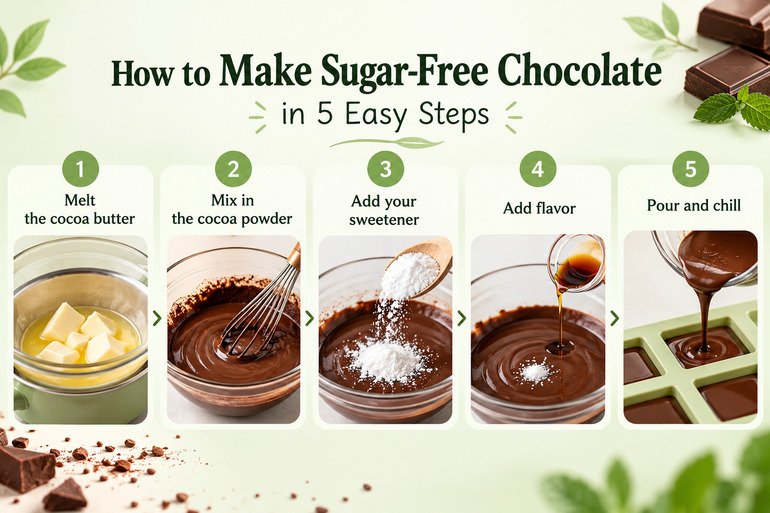
Step 1: Gently warm the cocoa butter
Pour a little water into a saucepan and heat it until it begins to simmer. Set a dry, heatproof bowl above the water, making sure the base does not touch it.
Place the cocoa butter inside. As the pieces soften, move them around with a spatula until no solid pieces remain. Remove the bowl from the heat.
Step 2: Work in the cocoa Powder
Pass the cocoa powder through a sieve directly into the warm cocoa butter in small portions.
After each addition, stir until the powder is evenly incorporated. Continue until the mixture has a consistent chocolate color and no visible dry pockets remain.
Step 3: Adjust the sweetness
Sprinkle a small portion of finely powdered sugar substitute into the chocolate mixture and stir thoroughly.
Taste a small amount with a clean, dry spoon before adding more. Sweetener blends vary considerably in strength, so follow the product’s conversion guidance rather than relying on a fixed amount.
Step 4: Finish the flavor
Add a tiny pinch of salt and, if using it, a few drops of oil-based vanilla flavoring.
Stir again to spread the flavor evenly. Avoid water-based extracts, as moisture can cause the chocolate mixture to clump.
Step 5: Shape and refrigerate
Transfer the chocolate mixture into a dry silicone mold. Give the mold a gentle tap against the counter to help trapped air rise.
Refrigerate until the chocolate is firm, usually about one to two hours. Carefully remove the pieces and keep them chilled in a closed container.
Best sweetener for sugar-free chocolate
Choosing the right sweetener is important because it affects both flavor and texture. The most common options include erythritol, monk fruit extract, and stevia. However, they are not interchangeable in equal amounts.
Erythritol
Erythritol is a sugar alcohol used in many reduced-sugar and sugar-free products. It provides sweetness without the same blood sugar response as regular table sugar, but it has limitations in chocolate making.
Because erythritol does not dissolve readily in fat, coarse granules may create a gritty texture. Finely powdered erythritol works better, although it can still leave a cooling sensation in the mouth.
The European Food Safety Authority (EFSA) established an acceptable daily intake of 0.5 grams per kilogram of body weight per day, based on gastrointestinal effects such as diarrhea.
Monk Fruit
Monk fruit extract is a concentrated sweetener made from monk fruit. It can provide sweetness without adding table sugar, making it useful in many low-sugar recipes.
However, many products labeled “monk fruit sweetener” contain erythritol or other ingredients as the main bulking agent. Always check the ingredient label before using one in homemade chocolate.
The FDA has reviewed GRAS notices for certain monk fruit extracts and has not questioned those safety conclusions under their intended conditions of use.
Stevia
Stevia-based sweeteners are another option for homemade chocolate. Highly purified steviol glycosides are intensely sweet, meaning only a small amount may be needed.
Some people notice a bitter or licorice-like aftertaste, particularly when too much is used.
If using pure stevia extract, follow the manufacturer’s recommended amount rather than substituting it tablespoon for tablespoon.
Which sweetener should you choose?
For this beginner recipe, a very finely powdered monk fruit–erythritol blend is a convenient starting option. For a smoother result, choose a sweetener specifically formulated for chocolate making.
Why does homemade chocolate turn grainy?
Grainy chocolate is one of the most common beginner mistakes. The good news is that three small errors usually cause it.
The usual culprits are:
- A sweetener that has not fully dissolved
- Fat that got too hot during melting
- Uneven or rushed stirring
Even a tiny drop of moisture can also wreck the texture. CocoTerra explains that water pulls sugar and cocoa particles together into clumps, so keep every bowl, spoon, and mold completely dry.
How to prevent grainy chocolate
Start with finely powdered ingredients and sift your cocoa powder before mixing. Keep all utensils completely dry, use gentle heat, and whisk thoroughly.
If your chocolate remains gritty because of the sweetener, additional stirring may not solve the problem. The sweetener may need finer grinding or replacement with a formulation designed for chocolate. Avoid adding water to fix the texture.
Keto sugar-free chocolate recipe variation
If you follow a ketogenic eating plan, homemade chocolate can be an option when you select suitable ingredients and control portions.
Unsweetened cocoa powder and cocoa butter contain relatively little sugar, while low-carbohydrate sweeteners can replace regular sugar.
However, the finished chocolate still contains some carbohydrates from cocoa and potentially other ingredients in the sweetener blend.
To create a keto-friendly variation:
- Use unsweetened cocoa powder.
- Choose a suitable low-carb sweetener.
- Avoid honey, maple syrup, or regular sugar.
- Add a small amount of chopped nuts, if desired.
- Check the carbohydrate content of the complete recipe and your serving size.
A small amount of cinnamon or unsweetened nut butter can also add flavor, although nut butter may change the texture and storage requirements.
Storage tips for homemade chocolate
Proper storage helps maintain the taste and texture of homemade chocolate. Since this recipe does not use commercial stabilizers or a traditional tempering process, refrigeration is the easiest option.
- Place the chocolate in an airtight container and store it in the refrigerator.
- Keep it away from moisture and strong-smelling foods, as chocolate can absorb surrounding odors.
- For a practical homemade batch, aim to enjoy it within 1–2 weeks when prepared with fresh, shelf-stable ingredients and handled hygienically. This is a general quality guideline, not a laboratory-verified shelf life.
- If you use coconut oil, refrigeration is especially helpful because the chocolate can soften quickly in warm conditions.
The upshot
Making a homemade sugar-free chocolate recipe is a simple way to enjoy chocolate while controlling the ingredients and sweetness. With unsweetened cocoa powder, cocoa butter, and the right sugar substitute, you can create a rich chocolate treat in your own kitchen.
For better results, focus on three things: finely powdered ingredients, gentle heat, and keeping moisture away from the chocolate. Once you become comfortable with the basic process, experiment with chopped nuts, cinnamon, or other suitable flavorings to make the recipe your own.
Homemade chocolate does not have to be complicated. Start with a small batch, adjust the sweetness to your taste, and enjoy the convenience of making chocolate without adding regular sugar.